
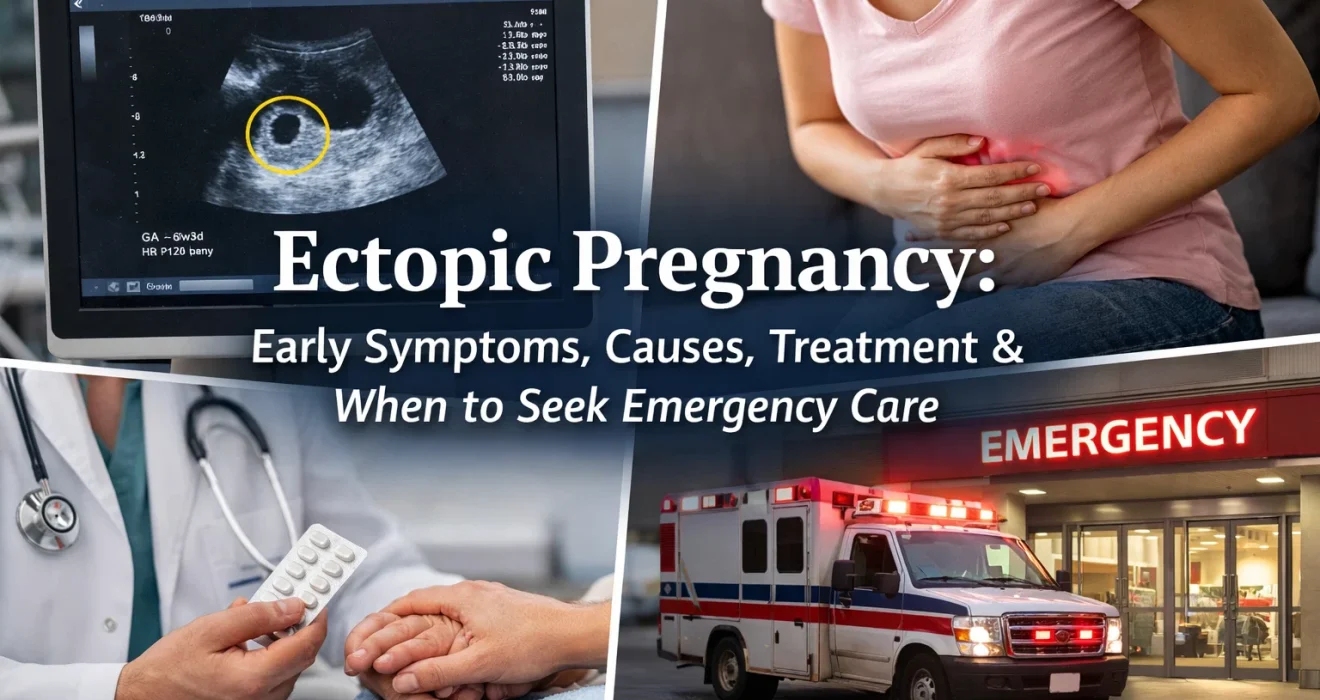
Introduction: A Serious Condition You Should Not Ignore
Pregnancy is usually a time filled with hope and excitement. However, in some cases, it can turn into a medical emergency without early warning. One such condition is ectopic pregnancy a situation where the pregnancy develops outside the uterus.
Many women do not realize something is wrong in the beginning because the early signs often feel like a normal pregnancy. This delay in recognition can be dangerous. If not diagnosed early, an ectopic pregnancy can lead to internal bleeding and become life-threatening.
Understanding the symptoms, causes, and treatment options can help you act quickly and protect your health.
What is Ectopic Pregnancy?
Ectopic pregnancy occurs when a fertilized egg implants outside the uterus instead of inside it. In most cases, it develops in the fallopian tube, which is why it is sometimes called a “tubal pregnancy.”
A normal pregnancy needs the space and support of the uterus to grow. Outside the uterus, the pregnancy cannot survive and may cause serious complications if not treated.
Where Does Ectopic Pregnancy Occur?
Although the fallopian tube is the most common location, ectopic pregnancy can occur in other areas as well:
- Fallopian tube (majority of cases)
- Ovary
- Cervix
- Abdominal cavity
The fallopian tube is not designed to support a growing pregnancy. As the pregnancy grows, it can stretch and eventually rupture the tube, leading to severe internal bleeding.

Early Symptoms of Ectopic Pregnancy (Weeks 4–6)
In the early stages, symptoms can be confusing because they often resemble a normal pregnancy.
Common Early Signs
- Missed period
- Positive pregnancy test
- Nausea or vomiting
- Breast tenderness
- Mild abdominal discomfort
Because these signs are normal in early pregnancy, many women do not suspect a problem.
Warning Signs You Should Never Ignore
As the condition progresses, more serious symptoms may appear. These are important warning signs that require immediate attention:
- Sharp or stabbing pain in the lower abdomen (often on one side)
- Vaginal bleeding (light spotting or heavy flow)
- Pain that spreads to the shoulder
- Dizziness, weakness, or fainting
- Severe pelvic pain
These symptoms may indicate internal bleeding or rupture, which is a medical emergency.
Where is Ectopic Pregnancy Pain Located?
Pain is one of the most important indicators of ectopic pregnancy.
It is usually:
- Felt on one side of the lower abdomen
- Sudden and intense
- Sometimes spreads to the shoulder due to internal bleeding
The location and intensity of pain can vary, but persistent or worsening pain should never be ignored.
What Causes Ectopic Pregnancy?
Ectopic pregnancy happens when the fertilized egg is unable to travel normally to the uterus.
Common Causes
- Blocked or damaged fallopian tubes
- Hormonal imbalances
- Pelvic infections such as PID
- Endometriosis
- Previous ectopic pregnancy
Any condition that affects the movement of the egg through the fallopian tube can increase the risk.
Risk Factors That Increase the Chances
Some women are at a higher risk of developing ectopic pregnancy.
Main Risk Factors
- Previous ectopic pregnancy
- Pelvic inflammatory disease (PID)
- Fertility treatments such as IVF
- Smoking
- Surgery involving fallopian tubes
- Age over 35
Additional Factors
- Sexually transmitted infections (STIs)
- Structural abnormalities in reproductive organs
- Use of intrauterine device (IUD) in rare cases
Having these risk factors does not mean ectopic pregnancy will happen, but it increases the possibility.
Why is Ectopic Pregnancy Dangerous?
Ectopic pregnancy is not just a complication — it can become life-threatening if untreated.
Major Risks
Fallopian Tube Rupture
As the pregnancy grows, it can cause the tube to burst.
Internal Bleeding
Rupture can lead to severe internal bleeding, which may not be visible immediately.
Shock and Collapse
Loss of blood can cause dizziness, fainting, or even collapse.
Emergency Surgery
In many cases, urgent surgery is needed to stop bleeding and save the patient.
Future Fertility Issues
Damage to the fallopian tube can affect the ability to conceive later.
This condition cannot result in a healthy baby and must be treated immediately.
When Does It Become an Emergency?
Seek urgent medical care if you experience:
- Severe abdominal pain
- Heavy vaginal bleeding
- Fainting or dizziness
- Shoulder pain
- Sudden weakness
Quick action can prevent serious complications and save your life.

How is Ectopic Pregnancy Diagnosed?
Doctors use a combination of tests to confirm the condition:
Ultrasound Scan
This helps identify where the pregnancy is located.
Blood Tests (hCG Levels)
Hormone levels are measured to assess pregnancy development.
Physical Examination
The doctor checks for pain, tenderness, and other symptoms.
Early diagnosis is the key to safe and effective treatment.
Treatment Options for Ectopic Pregnancy
Treatment depends on how early the condition is detected.
1. Medical Treatment (Early Stage)
If diagnosed early:
- Medication such as Methotrexate is given
- It stops the growth of pregnancy cells
- Surgery may not be required
2. Surgical Treatment
If the condition is advanced:
Laparoscopy (Minimally Invasive Surgery)
- Small incisions are made
- The ectopic pregnancy is removed
Emergency Surgery
- Required if the fallopian tube ruptures
- Stops internal bleeding immediately
3. Follow-Up Care
After treatment:
- Regular monitoring of hormone levels
- Ensures complete recovery
- Prevents complications
Can You Get Pregnant Again After Ectopic Pregnancy?
Yes, many women have healthy pregnancies after proper treatment.
Important Considerations
- Fertility may still be normal
- There is a slightly higher risk of recurrence
- Early monitoring in future pregnancies is essential
Effect on Fertility
Fertility outcomes depend on:
- The condition of the fallopian tubes
- Type of treatment received
- Overall reproductive health
Helpful Tips
- Visit your doctor early in the next pregnancy
- Get an early ultrasound
- Maintain a healthy lifestyle
When Should You See a Doctor?
You should not delay medical consultation if you have:
- A positive pregnancy test with abdominal pain
- Bleeding during early pregnancy
- A history of ectopic pregnancy
Early medical care can prevent serious complications.
Expert Care is Essential
Timely diagnosis and proper treatment require experience and medical expertise.
Dr. Hina Jafri provides:
- Early and accurate diagnosis
- Safe and effective treatment options
- Personalized care focused on protecting fertility
Can Ectopic Pregnancy Be Prevented?
It cannot always be prevented, but certain steps can reduce the risk.
Prevention Tips
- Avoid smoking
- Treat infections early
- Regular medical checkups
- Maintain reproductive health
Frequently Asked Questions
Can a pregnancy test detect ectopic pregnancy?
No, it only confirms pregnancy. An ultrasound is needed to detect ectopic pregnancy.
How early can ectopic pregnancy be detected?
It can usually be identified between 4 to 6 weeks through scans and blood tests.
Is ectopic pregnancy dangerous?
Yes, it can be life-threatening if not treated early.
Can the baby survive in ectopic pregnancy?
No, the pregnancy cannot develop normally outside the uterus.
Can I have a normal pregnancy later?
Yes, many women successfully conceive again after treatment.
Conclusion: Early Action Can Save Your Life
Ectopic pregnancy is a serious condition, but early diagnosis makes a major difference. Many complications can be avoided if symptoms are recognized and treated on time.
Pain or bleeding during early pregnancy should never be ignored. Listening to your body and seeking medical help quickly can protect both your life and your future fertility.
Seek immediate medical care and consult a qualified gynecologist