


Ovarian cancer remains one of the most serious yet least discussed health concerns affecting women worldwide. Often referred to as a “silent killer,” Ovarian Cancer tends to develop quietly, with symptoms that are subtle, vague, and easily mistaken for common digestive or hormonal issues. This makes early detection difficult—but not impossible.
From a clinical perspective, awareness, timely screening, and patient education are critical in improving outcomes. This article provides a comprehensive, medically grounded overview of ovarian cancer, its warning signs, risk factors, preventive strategies, and the importance of early diagnosis.

Understanding Ovarian Cancer
Ovarian cancer begins in the ovaries, which are part of the female reproductive system responsible for producing eggs and hormones such as estrogen and progesterone. There are several types of ovarian cancer, but the most common is epithelial ovarian cancer, which originates in the cells covering the outer surface of the ovary.
One of the key challenges in diagnosing ovarian cancer is its tendency to remain undetected in early stages. Unlike some other cancers, there is no widely effective routine screening test for the general population. As a result, many cases are diagnosed only after the disease has progressed.
Why It Is Called a “Silent Killer”
The term “silent killer” is not an exaggeration. Early-stage ovarian cancer often does not produce noticeable symptoms. When symptoms do appear, they are usually mild and can mimic everyday health issues such as indigestion, menstrual discomfort, or urinary problems.
Patients frequently dismiss these signs or attempt self-treatment, which leads to delays in seeking medical advice. By the time a proper diagnosis is made, the cancer may have already spread beyond the ovaries.
From a clinical standpoint, this highlights the importance of educating patients about persistent, unusual symptoms rather than relying solely on severity.
Common Symptoms That Should Not Be Ignored
Although ovarian cancer symptoms can be subtle, there are certain patterns that healthcare professionals advise women to monitor closely. These include:
- Persistent bloating or abdominal swelling
- Pelvic or lower abdominal pain
- Difficulty eating or feeling full quickly
- Frequent or urgent need to urinate
- Unexplained weight loss
- Ongoing fatigue or low energy levels
What distinguishes these symptoms from routine discomfort is their persistence and frequency. If these symptoms occur almost daily for several weeks, it is important to consult a qualified medical professional.
Why Symptoms Are Often Misinterpreted
Many of the early warning signs of ovarian cancer overlap with gastrointestinal or hormonal conditions such as irritable bowel syndrome (IBS), menstrual irregularities, or urinary tract infections.
For example:
- Bloating may be mistaken for gas or dietary issues
- Pelvic pain may be linked to menstrual cycles
- Frequent urination may be attributed to hydration levels or mild infections
This overlap often leads to delayed diagnosis. From a medical perspective, clinicians emphasize the importance of symptom duration and pattern rather than isolated occurrences.
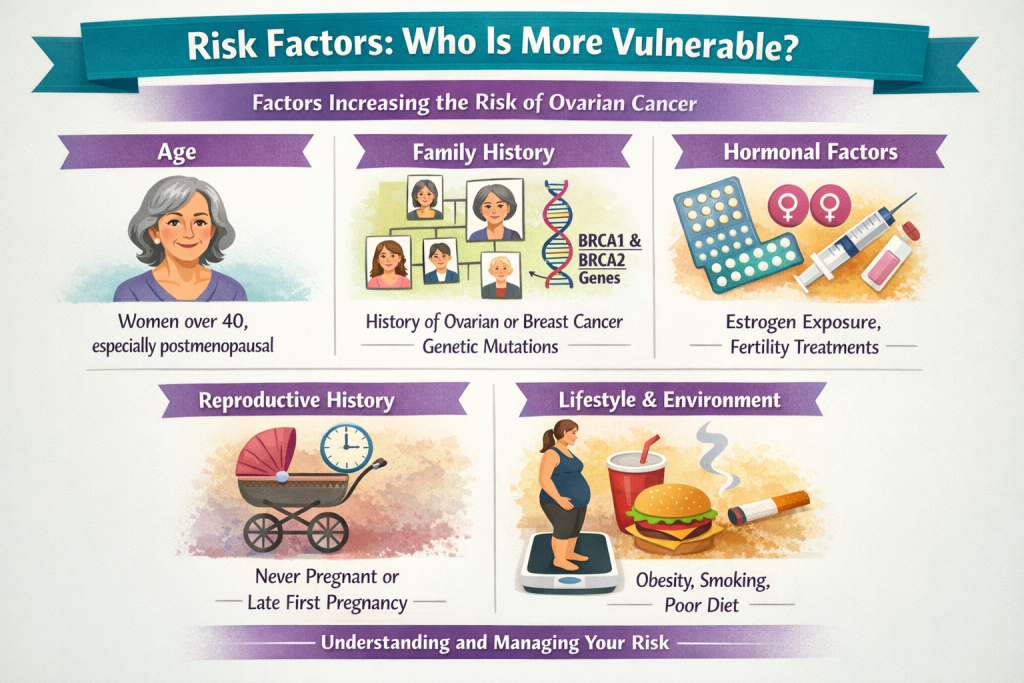
Risk Factors: Who Is More Vulnerable?
While ovarian cancer can affect women of any age, certain factors significantly increase the risk:
1. Age
Women over the age of 40, particularly postmenopausal women, have a higher likelihood of developing ovarian cancer.
2. Family History
A strong family history of ovarian or breast cancer increases risk. Genetic mutations, especially in the BRCA1 and BRCA2 genes, are closely linked to higher susceptibility.
3. Hormonal Factors
Hormonal imbalances, prolonged estrogen exposure, or certain fertility treatments may contribute to risk, although this varies by individual case.
4. Reproductive History
Women who have never been pregnant or who had their first pregnancy later in life may face a slightly increased risk.
5. Lifestyle and Environmental Factors
While not direct causes, factors such as obesity, smoking, and poor dietary habits may influence overall cancer risk.
The Importance of Early Detection
Early detection significantly improves survival rates in ovarian cancer. When diagnosed at an early stage, treatment options are more effective, and long-term outcomes are considerably better.
However, due to the lack of routine screening tests, early detection relies heavily on:
- Patient awareness
- Timely reporting of symptoms
- Clinical evaluation by experienced healthcare providers
Diagnostic methods may include pelvic examinations, ultrasound imaging, blood tests such as CA-125, and, if necessary, biopsy procedures.
Prevention and Risk Reduction Strategies
While there is no guaranteed way to prevent ovarian cancer, several evidence-based strategies can help reduce risk:
Regular Gynecological Checkups
Routine visits to a qualified gynecologist play a crucial role in early detection. Even in the absence of symptoms, periodic examinations help identify abnormalities at an earlier stage.
Healthy Lifestyle Choices
Maintaining a balanced diet, engaging in regular physical activity, and managing body weight contribute to overall health and may lower cancer risk.
Awareness of Family History
Women with a family history of ovarian or breast cancer should consider genetic counseling and discuss screening options with their healthcare provider.
Monitoring Body Changes
Paying attention to persistent or unusual symptoms and not dismissing them is one of the most effective preventive measures.
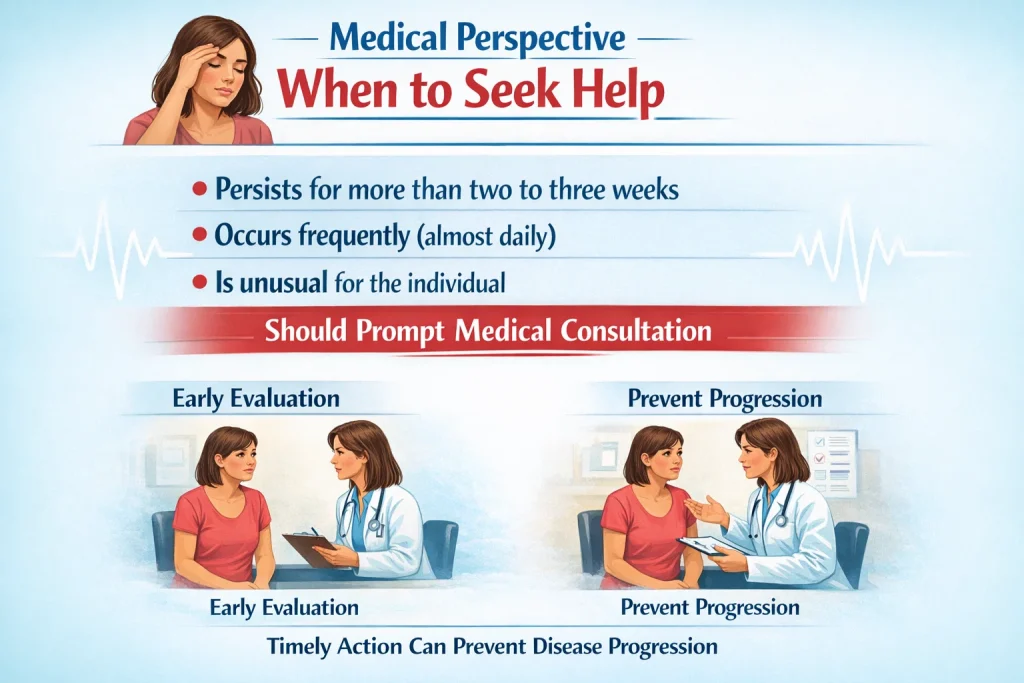
Medical Perspective: When to Seek Help
From a professional standpoint, any symptom that:
- Persists for more than two to three weeks
- Occurs frequently (almost daily)
- Is unusual for the individual
should prompt medical consultation.
Early evaluation may involve non-invasive tests initially, but timely action can prevent disease progression.
Treatment Options
Treatment for ovarian cancer depends on the stage at diagnosis, overall health, and type of cancer. Common approaches include:
Surgery
Surgical removal of the tumor is often the first step. In advanced cases, this may include removal of both ovaries, fallopian tubes, and surrounding tissues.
Chemotherapy
Chemotherapy is commonly used after surgery to eliminate remaining cancer cells or, in some cases, before surgery to shrink tumors.
Targeted Therapy
Modern treatments may involve targeted therapies that focus on specific cancer cell mechanisms, improving treatment precision.
Hormone Therapy
In certain cases, hormone therapy may be recommended to block cancer growth influenced by hormones.
A multidisciplinary approach—combining gynecology, oncology, and supportive care—is essential for optimal outcomes.
Psychological and Emotional Impact
A diagnosis of ovarian cancer can have significant emotional and psychological effects. Anxiety, stress, and uncertainty are common responses.
Healthcare providers often recommend:
- Counseling or psychological support
- Patient support groups
- Open communication with family and caregivers
Addressing mental health is an important part of comprehensive cancer care.
The Role of Patient Education
Education remains one of the most powerful tools in combating ovarian cancer. Women who are informed about their bodies, aware of symptoms, and proactive in seeking care are more likely to receive early diagnoses.
Healthcare professionals stress the importance of:
- Public awareness campaigns
- Community health programs
- Accessible medical consultations
Expert Guidance and Consultation
Access to qualified medical professionals plays a vital role in prevention, diagnosis, and treatment. Consulting an experienced gynecologist ensures accurate evaluation and timely intervention.
For professional medical advice and personalized care, consulting specialists such as Dr. Hina Jafri can provide valuable guidance. Expert consultation helps patients understand their symptoms, assess risk factors, and choose appropriate diagnostic and treatment pathways.
Final Thoughts
Ovarian cancer is a serious health condition that often develops silently, but it is not beyond control. Awareness, vigilance, and timely medical care can make a significant difference.
Ignoring persistent symptoms or delaying consultation can lead to late-stage diagnosis, which complicates treatment. On the other hand, early detection greatly improves survival rates and treatment success.
Every woman should:
- Stay informed about her health
- Monitor unusual changes in her body
- Seek medical advice without delay
Ovarian cancer may be silent, but awareness gives it a voice—and that voice can save lives.